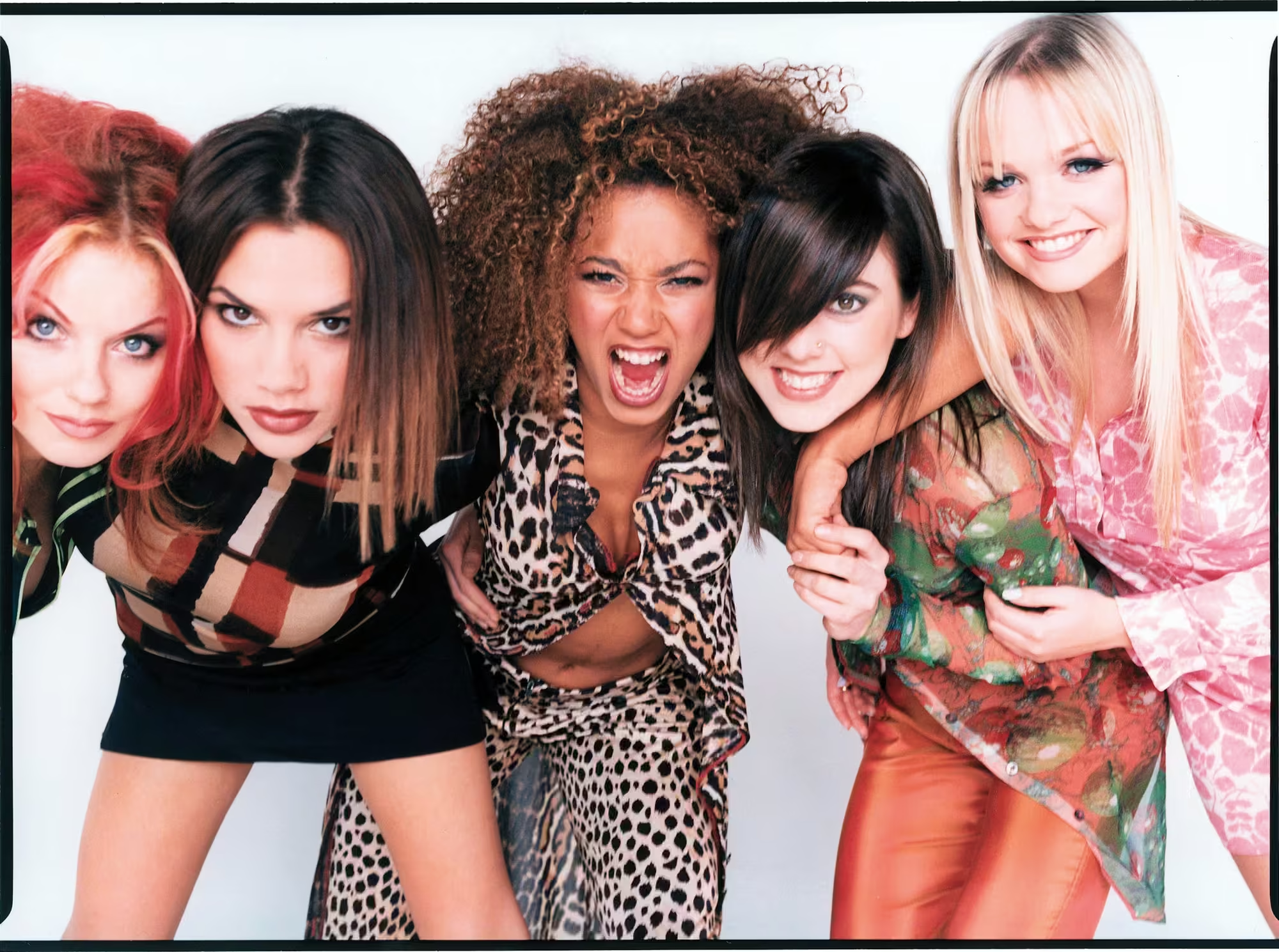
It’s impossible to imagine what the world would look like without the Spice Girls. The British girl band broke down cultural barriers, paved the way for women in pop and empowered people everywhere, one high kick at a time.
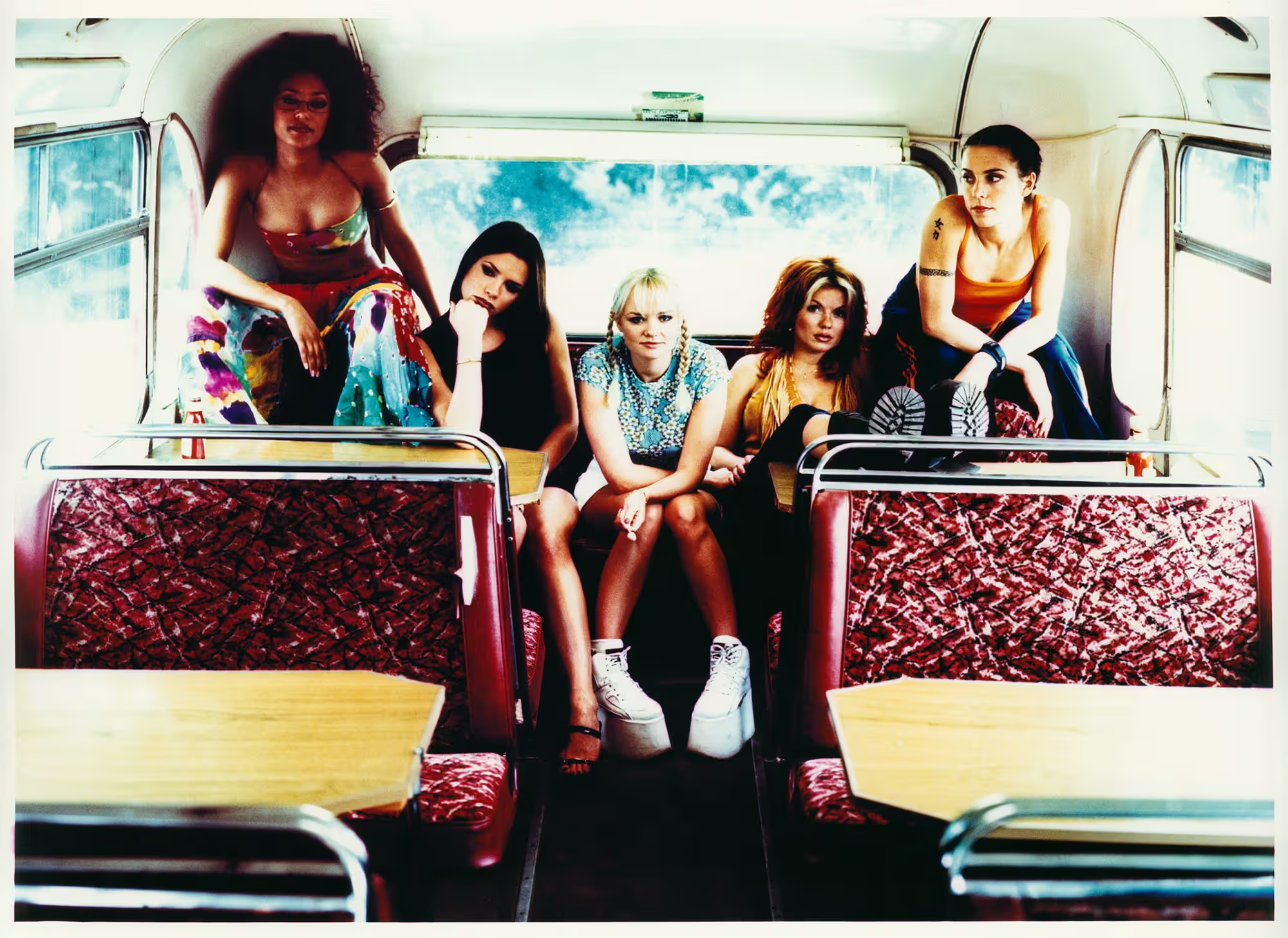
They’re the most successful girl group in history, with an unmatched run of #1 singles and record-breaking albums soundtracking a collective coming of age. Baby, Ginger, Scary, Sporty and Posh epitomised the optimism and no-holds-barred attitude of the 1990s as it turned into the new millennium. And yet their monumental legacy remains undimmed. Three decades since the Spice Girls formed, the full force of their girl power can still be felt across contemporary music, culture and fashion. Today, the biggest music stars call the Spice Girls an inspiration – Taylor Swift, Charli XCX, Dua Lipa, Adele and Billie Eilish among them – and their anthems are in the billions of plays on streaming platforms, as new generations discover them and champion the band as their own.
The Spice Girls have redefined how successful a British pop act can be on a global scale, selling over 100 million records worldwide. That success was unprecedented right from the start: they topped the charts in 37 countries with debut single ‘Wannabe’ and followed it with Spice, the best-selling album by a girl band ever. The eye-popping accomplishments kept coming: their second album, 1997’s Spiceworld, sold quicker than any other album by a girl group, while their blockbuster film of the same name was a global box office sensation and has become a cult classic. They’ve had a total of nine UK #1s and three of those were consecutive Christmas chart-toppers, a record they share with The Beatles.
Fast forward through the years and the Spice Girls reunions have continued to be historic events. The 2007-2008 Return of the Spice Girls Tour included 17 nights at London’s O2 Arena. They returned for a landmark performance during the London 2012 Olympics closing ceremony, where they rode around the stadium in five iconic black cabs, singing a medley of hits. A decade on, the buzz around their 2019 reunion reached new levels of hysteria. Demand was enormous, with, at one point, over 700,000 people queuing online to buy tickets to their 13 sold-out stadium dates in the UK and Ireland. The shows were gleefully attended by the likes of Haim, Emma Stone, Sam Smith and Adele, who wrote on her way to the night how the Spice Girls “inspired me to run for my life and never look back.”
But the reason the band resonates so strongly today is more about a spirit than stats. The Spice Girls are radical in every sense: a girl band who broke through in an era dominated by men; hit-makers who rebelled against music industry snobbery and a pop gang who gave Britpop’s swaggering big mouths a run for their money. “I just wanna say, Liam, come and have a go if you think you’re hard enough”, said Melanie C during the Spice Girls’ acceptance speech for British Single of the Year at the 1997 BRIT Awards, when ‘Wannabe’ won over Oasis’s ‘Don’t Look Back In Anger’.
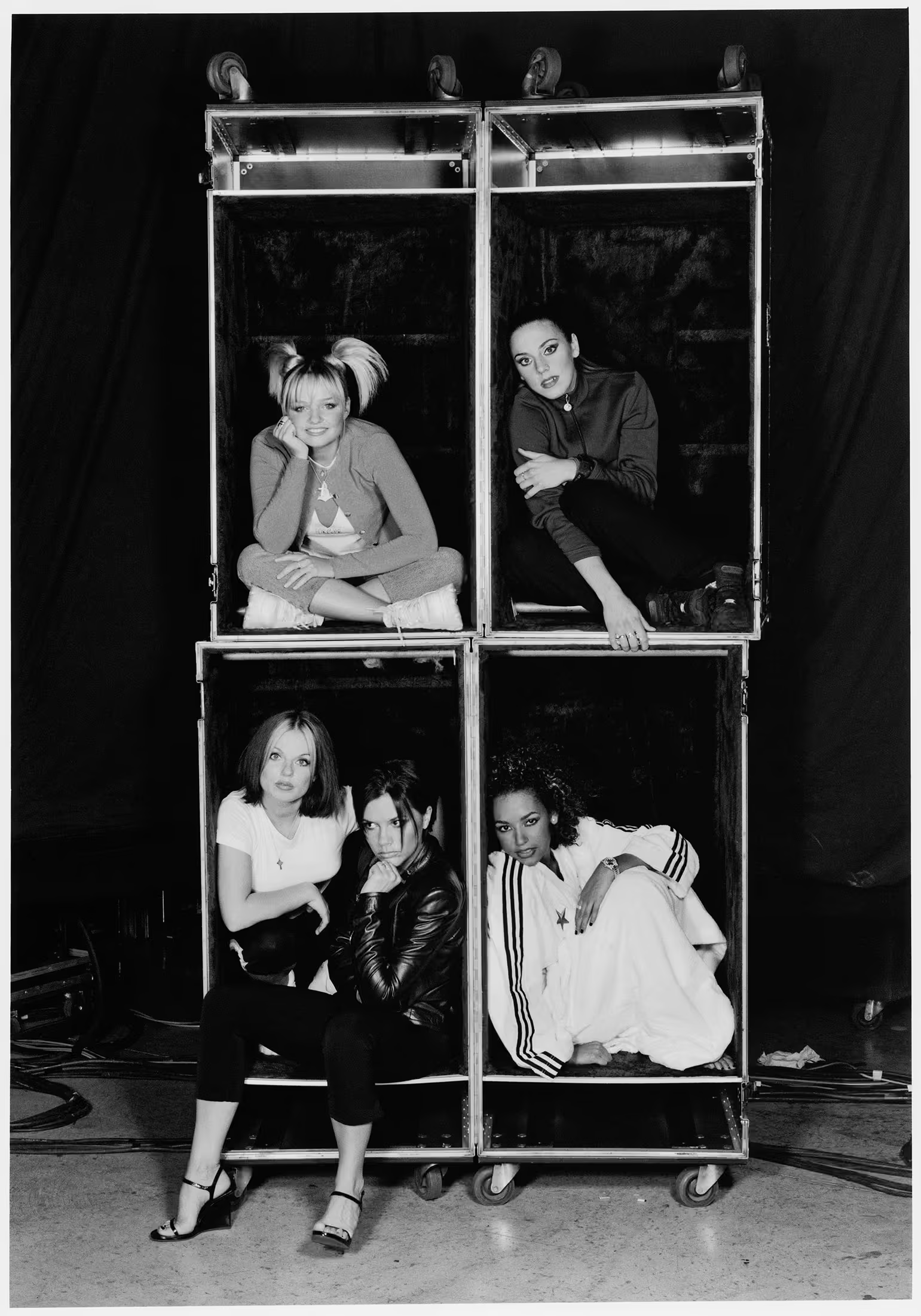
Across three studio albums, 11 singles and 18 music videos, they continued to forge a path in pop that felt revolutionary, even lawless – this, after all, being the band who’d show up to radio stations, climb onto the tables and demand that their new single was played on air. The Spice Girls’ unapologetically catchy blend of high-sheen pop, uptempo dance and R&B undeniably changed the sound of the 90s and their influence continues to reverberate through the musical landscape: their songs are timeless and their themes of party-starting, friendship and self-love still resonate across the world today.
Those early days of the Spice Girls are baked into pop music lore. Long before social media became the predominant way to spot new stars, Emma Bunton, Geri Halliwell, Melanie Brown, Melanie Chisholm and Victoria Adams responded to an advert in a magazine calling for “streetwise, outgoing, ambitious and dedicated” singers and dancers to audition for a new girlband. After scoring their place in the lineup, the five shared a house on the outskirts of London, where they forged an unbreakable bond. The Spice Girls had distinct personalities that invited superhero nicknames, but they shared an anarchic attitude and a supportive sisterhood. They backed each other through the ups and downs of fame and in their music, too. Uniquely for a group at that time, they not only wrote their songs together and are listed as co-writers on their first two albums, they split their vocal lines equally, putting solidarity front and centre. The Spice Girls weren’t one homogenised group; their wild, chaotic and quirky personas showed that pop music didn’t have to fit one narrow view of femininity.
If there was a glass ceiling, the Spice Girls would smash it. In the mid-90s, when the group began, the UK was in the firm grip of boyband fever. Label executives weren’t convinced that music by women would have the same effect on young fans. The band had to persuade producers to work with them and give them studio time. A five-woman cottage industry, they’d work up ideas for choreography and videos alongside writing the music, effectively building the Spice world as the songs took shape. Few could have predicted how they’d immediately capture the nation’s hearts: the Spice Girls’ 1996 breakout hit ‘Wannabe’ – which the band had insisted on releasing as their lead single, despite their label’s reservations – went to UK #1 for seven weeks (and has continued to notch up over 1.4 billion streams on Spotify alone). Its one-take video, in what’s now London’s St Pancras Renaissance Hotel, spotlighted the Spice Girls as exceptionally fun and disruptors who were shaking up the status quo with each stomp of their platform trainers. They were the ultimate squad that fans wanted to be in and became the epitome of the ‘Cool Britannia’, leading a resurgence in pop culture across the country whose aftershocks can still be felt today.
The 1996 debut album ‘Spice’ came next and a further three consecutive UK #1 singles, including ‘Say You’ll Be There’, ‘2 Become 1’ and ‘Mama / Who Do You Think You Are’. The group sang the latter track at the 1997 BRIT Awards, a performance that turned Geri Halliwell’s Union Jack dress into one of the most memorable outfits in fashion history. That same year, they swiftly released their second album, Spiceworld. It was mostly written as they were shooting scenes for their debut movie, starring Richard E. Grant as their manager and a host of other cameos from British acting royalty. The record featured the UK #1s ‘Spice Up Your Life’ and ‘Too Much’, as well as ‘Stop’ and their final chart-topper as a five-piece, ‘Viva Forever’, a timely track that became the eventual theme to Geri Halliwell’s departure.
As a four, the Spice Girls released third album Forever in November 2000, marking the new millennium with a revamped R&B sound and the UK #1s ‘Goodbye’ and ‘Holler/Let Love Lead The Way’. The album was to be their swansong. The Spice Girls had received the Lifetime Achievement Award at the BRIT Awards earlier in March and by December, the band had announced an indefinite hiatus. But their impact kept reverberating through UK music, through their solo careers and stars they inspired. By the time they pressed pause, the Spice Girls had firmly ushered in the 90s and Y2k girl band era, opening the doors for a new frontier of women in pop.
A world without the Spice Girls, then, would be a world without GIRL POWER, but also people power. The power to make it against the odds. To break the rules and carve your own lane. In the era in which the band emerged, the battle of the sexes was writ large and yet the Spice Girls’ immortal slogan gave anyone who had been made to feel ‘other’ the confidence to take up space in a male-dominated world. They created a global movement, second only to Beatlemania, that’s still as radically inclusive today, evolving into a new era to uplift all marginalised people and channel your inner strength. The Spice Girls gave everyone permission. There has never been another pop group quite like them and 30 years later, there still has never been. What’s on the horizon for the beloved girlband? Hai, sí, ja! Hold tight!